October 27, 2026
On October 8, 2026, the Lake George Association and the Lake George Waterkeeper brought together policymakers, municipal and highway professionals, scientists, businesses and environmental leaders at the 2026 New York State Salt Summit presented by the Times Union.
These experts convened to tackle one of New York’s most widespread water quality challenges: reducing road salt pollution while maintaining safe winter roads. In its 11th year, the Salt Summit moved to Albany to shift its focus to statewide road salt use reduction and bring science, proven solutions and public policy closer together.
Attendees from 87 municipalities in New York State traveled to Albany to hear from emerging leaders in the road salt reduction conversation. This was the most attended Salt Summit in its 11-year history, showing that there is statewide demand for these important conversations.
The full-day Summit kicked off with Chris Navitsky, PE, and Dr. Brendan Wiltse's welcome remarks alongside encouraging words from Congressman Paul Tonko.
"Our rivers, our lakes, our waterbodies are the lifeblood of communities. They have defined our past for certain and our current and future successes," shared Congressman Tonko. He added, "It is important that we work to ensure access to clean drinking water, sustain ecosystems and dedicate resources and attention necessary to protect them in the years to come. This event has been such an important and integral part of that effort."
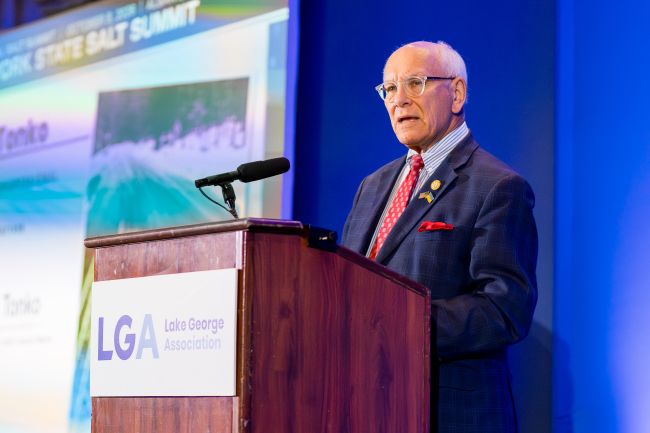
Congressman Paul Tonko
Following Congressman Tonko, the Summit launched into its packed agenda, beginning with its session discussing "The Science of Road Salt." Speakers Dr. Sarah Whorley and Dr. John Jackson shared insights on how salting roads has unintended consequences outside of winter road safety.
"We used to think road salt pollution of our waterbodies was mainly just a wintertime problem, but there is an increasing body of evidence showing that it is affecting streams and other waterbodies year-round," stated Dr. Whorley who sampled over 30 streams in New York State from May 2024 through April 2025 to study freshwater salinization. Her research showed that multiple streams exceeded the US EPA acute salinity limit, especially streams located near high-traffic facilities. She also assessed salinization's impacts to stream ecology on macroinvertebrate biodiversity and stream food webs.
Dr. Jackson's presentation addressed "Increasing spatial and temporal resolution of stream salt data by engaging the public to help sample." Dr. Jackson believes that science will not be the driving factor in reducing road salt pollution, advocating for the mobilization of an informed public through community science involvement. With the help of community participants, Dr. Jackson surveyed over 300 stream sites to assess the impacts of road salt pollution. They found that parking lots and high road densities drove salt spikes.
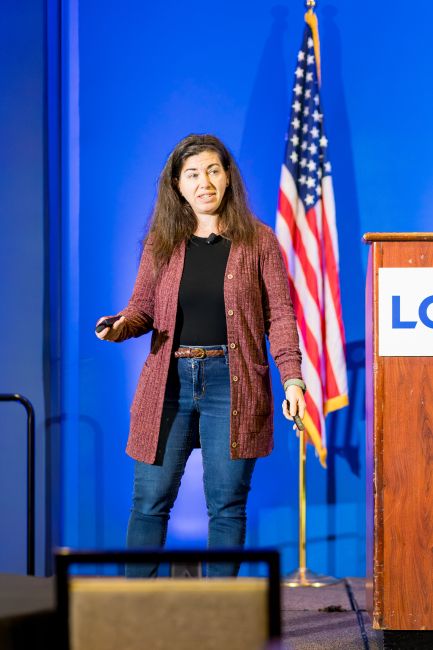
Dr. Sarah Whorley
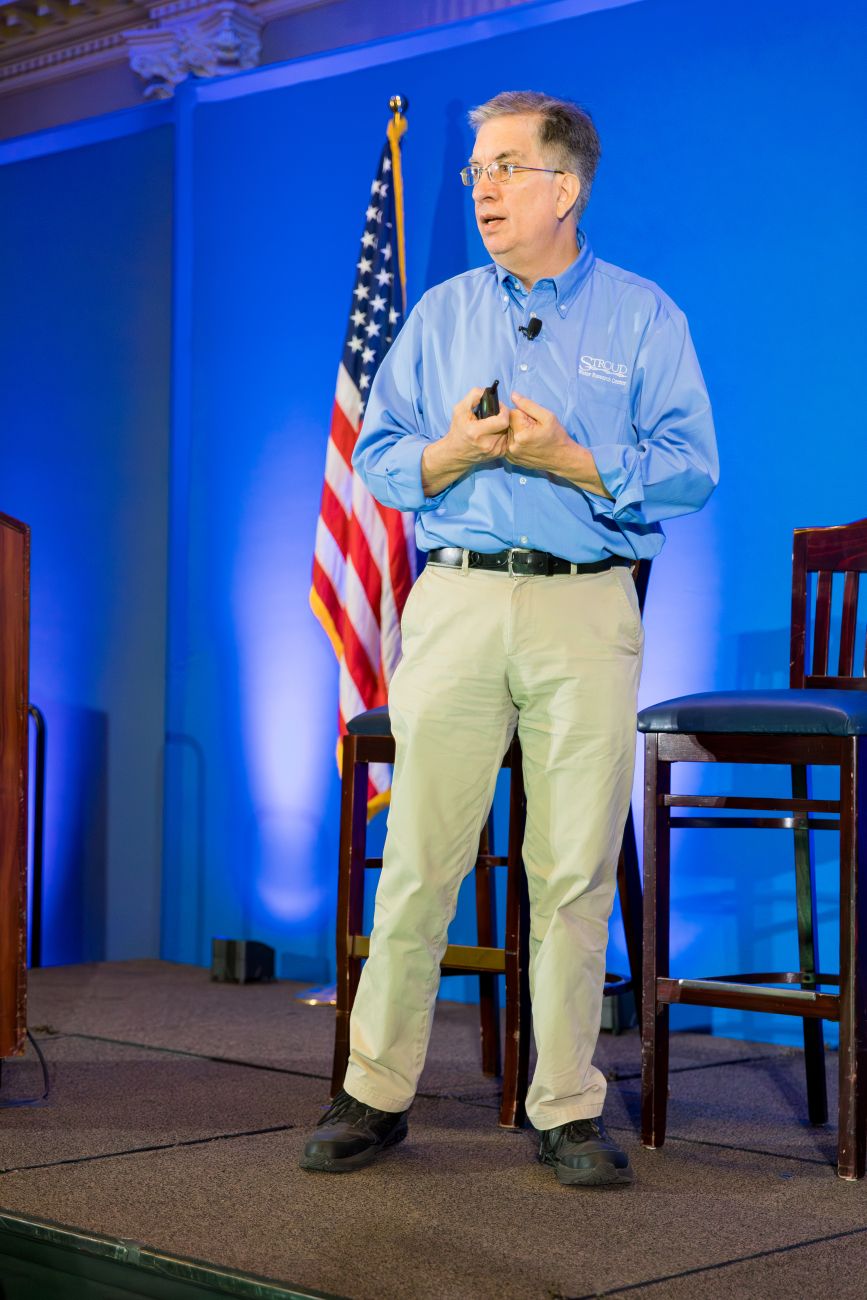
Dr. John Jackson
The following session, "New York's Changing Winters," tackled how changes in winter weather are reshaping the challenge of balancing safe winter road maintenance and road salt use reduction. Dr. Zach Labe, Paul Caiano and Mark Shannaberger individually presented and sat down for a discussion moderated by Lake George Waterkeeper, Chris Navitsky, on this very topic.
Each speaker expressed that while winters are changing, this does not mean that there will be less snow. Dr. Labe, a climate scientist from Climate Central, shared that warmer atmospheres hold more moisture, which can lead to more snow events. He went on to say we would need to observe a more significant increase in winter temperatures to notice a reduction in winter snow events. Therefore, it is essential that the issue of road salt use reduction is addressed, especially as winter storms become more intense.
Channel13 News meteorologist Paul Caiano also explained that increasing winter rain, sleet and ice events emphasize the importance of balancing winter road safety with ecological impacts associated with road salt use. Caiano warned Summit attendees to prepare for winters to look different in the coming years.
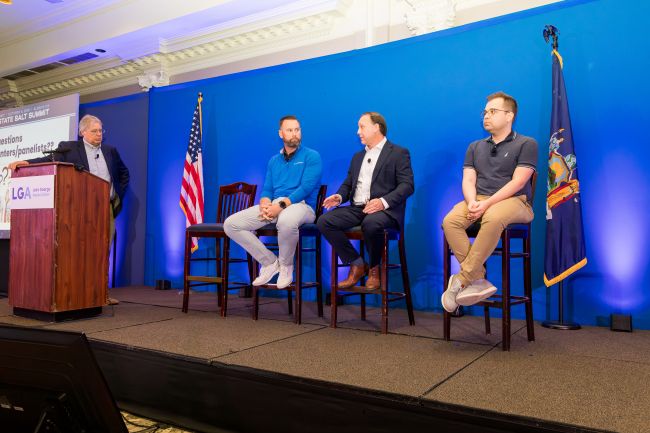
Chris Navitsy, PE, Mark Shannaberger, Paul Caiano and Dr. Zach Labe
The morning programming also included a Highway Academy for municipal stakeholders led by WIT Advisers to explore proven approaches to smarter winter maintenance (SWiM) while building a network of adopters who can help accelerate effective salt-reduction practices across New York.
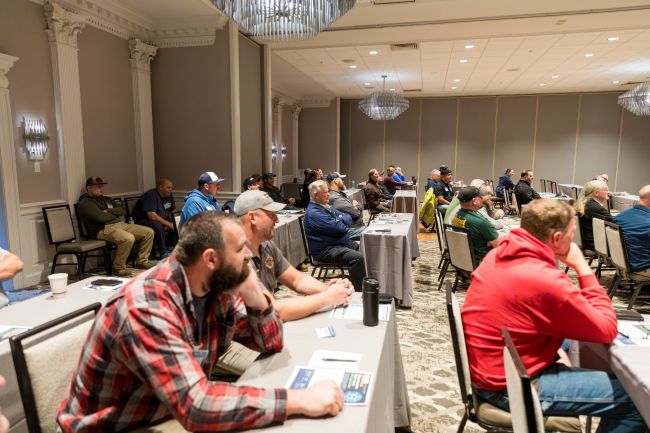
Highway Academy
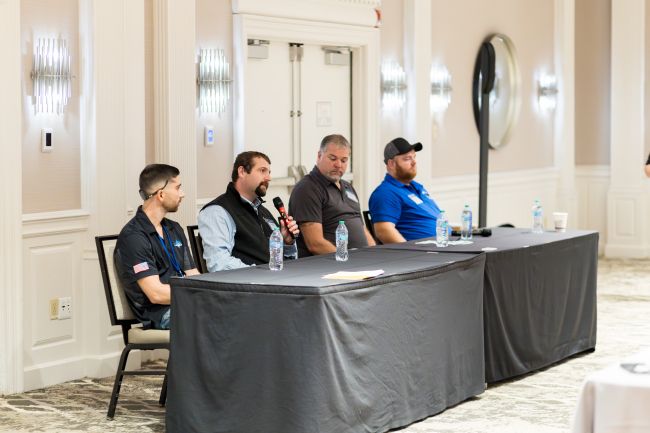
Highway Academy
A highlight of the Summit was the "From Science to Policy: Legislative Panel." The panel featured New York Assembly Members Michael Cashman and Carrie Woerner, American Water Works Association's Judy Hansen, Adirondack Council's Andrew Williams and moderator Dan Clark from the Times Union.
Following the Adirondack Road Salt Task Force Report and the Croton Salinity Study, winter road salt reduction has demanded statewide attention, requiring statewide policies. By moving to Albany, the Salt Summit became more accessible for legislators, raising statewide awareness about road salt and its impacts.
"It's all about resources," shared Assembly Member Cashman. "Technology is rapidly changing. We have to stay in a position that we're going to recalibrate, but we have to do it in a collective manner." He added, "Clean water is a constitutional right in New York State. Everybody needs it."
"I think the state needs to be an active partner with municipalities," Assembly Member Woerner stated. "Everybody wants to use the most effective means to keep their roads safe and to efficiently eradicate the snow... We just need to set the table that says this is important from an environmental perspective as well as from a road safety perspective."
Judy Hansen spoke to incentivizing change, highlighting community benefits as well as environmental ones. Andrew Williams also added that it is important to equip municipalities with the equipment and funding necessary to adopt winter road management best practices.
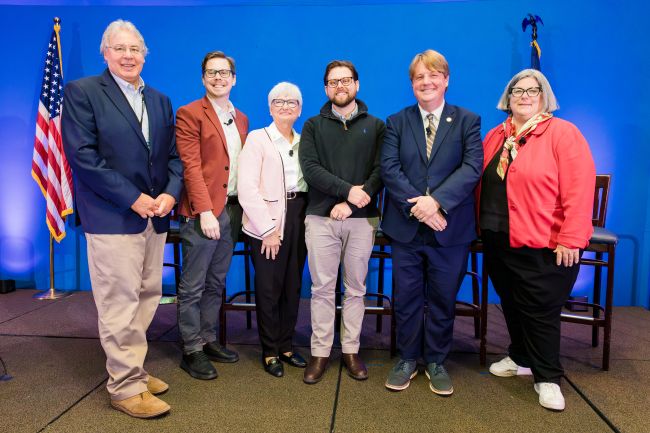
Chris Navitsky, PE, Dan Clark, Judy Hansen, Andrew Williams, Assembly Member Michael Cashman and Assembly Member Carrie Woerner
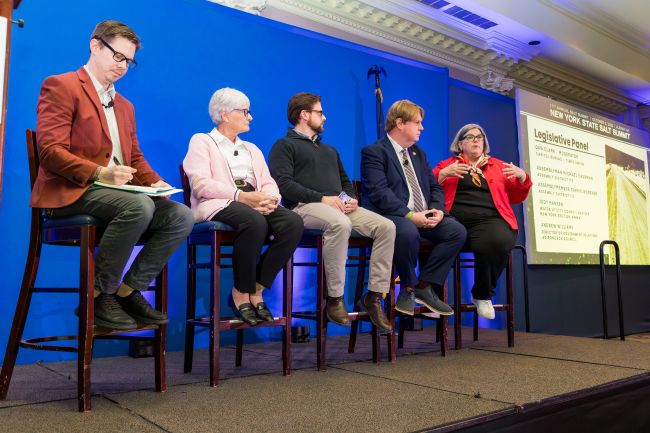
Dan Clark, Judy Hansen, Andrew Williams, Assembly Member Michael Cashman and Assembly Member Carrie Woerner
After addressing the role that legislation can play in the road salt conversation, the Summit dove back into the science with the "From Roads to Faucets: Road Salt's Impacts on New York's Drinking Water" session. Speakers Dr. Shannon Roback, Ty Fuller and Adam Bosch examined how salt moves into groundwater and drinking water supplies.
Ty Fuller added in a downstate perspective, explaining that while high salinity in water can be caused by seawater, Br/Cl analysis helped differentiate these two separate drivers of oversalinization. His research and analysis were able to identify an improperly stored road salt supply that caused oversalinization of a nearby stream.
Coming from the New York City Department of Environmental Protection, Adam Bosch also emphasized the statewide nature of this issue. He shared that New York City's water supply was established in 1842 and that it serves 9.8 million people. This essential water supply for so many is threatened by road salt pollution. Bosch urged Summit attendees to learn from other states. "We're really far behind these other places. But that means we have a lot to learn from that and we can replicate on a scale and in a way that makes sense for New York State."
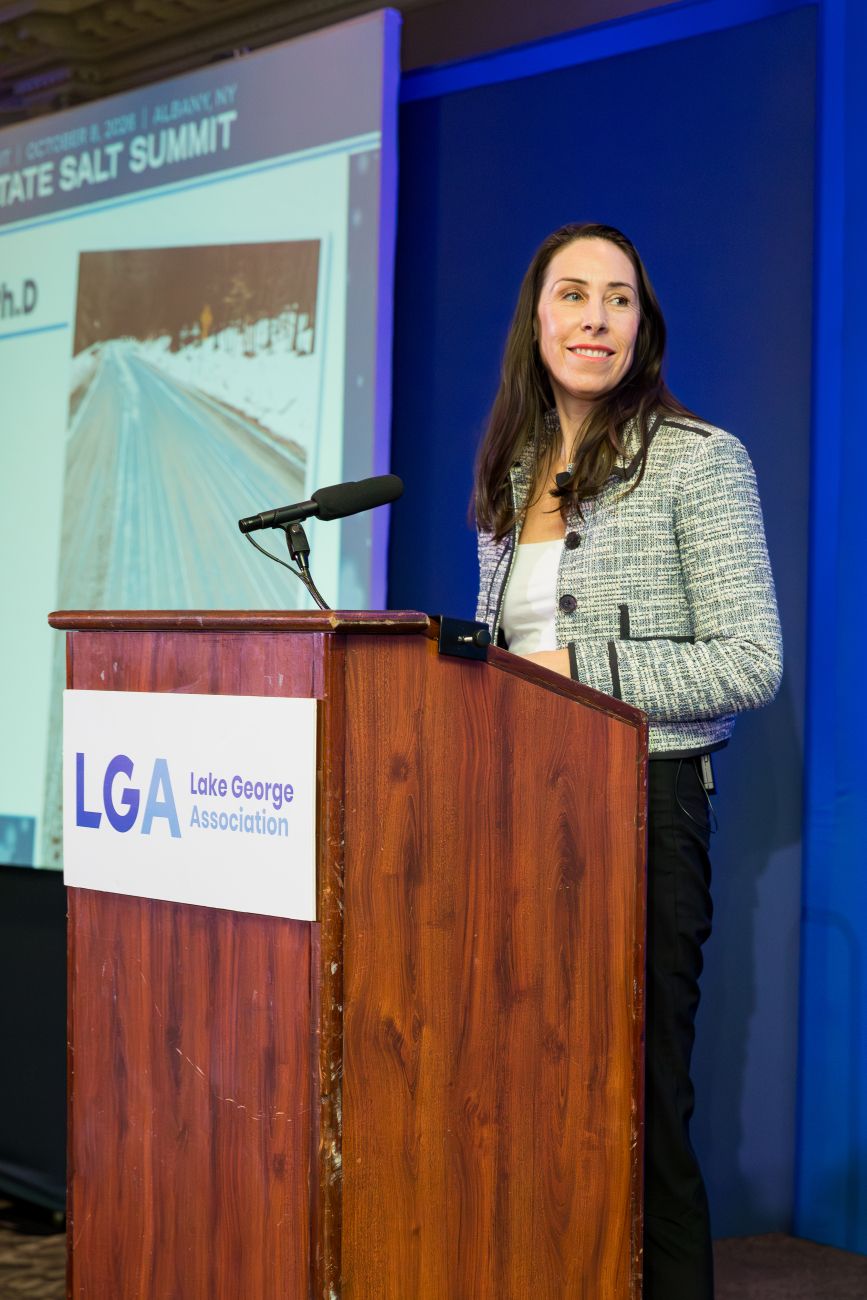
Dr. Shannon Roback
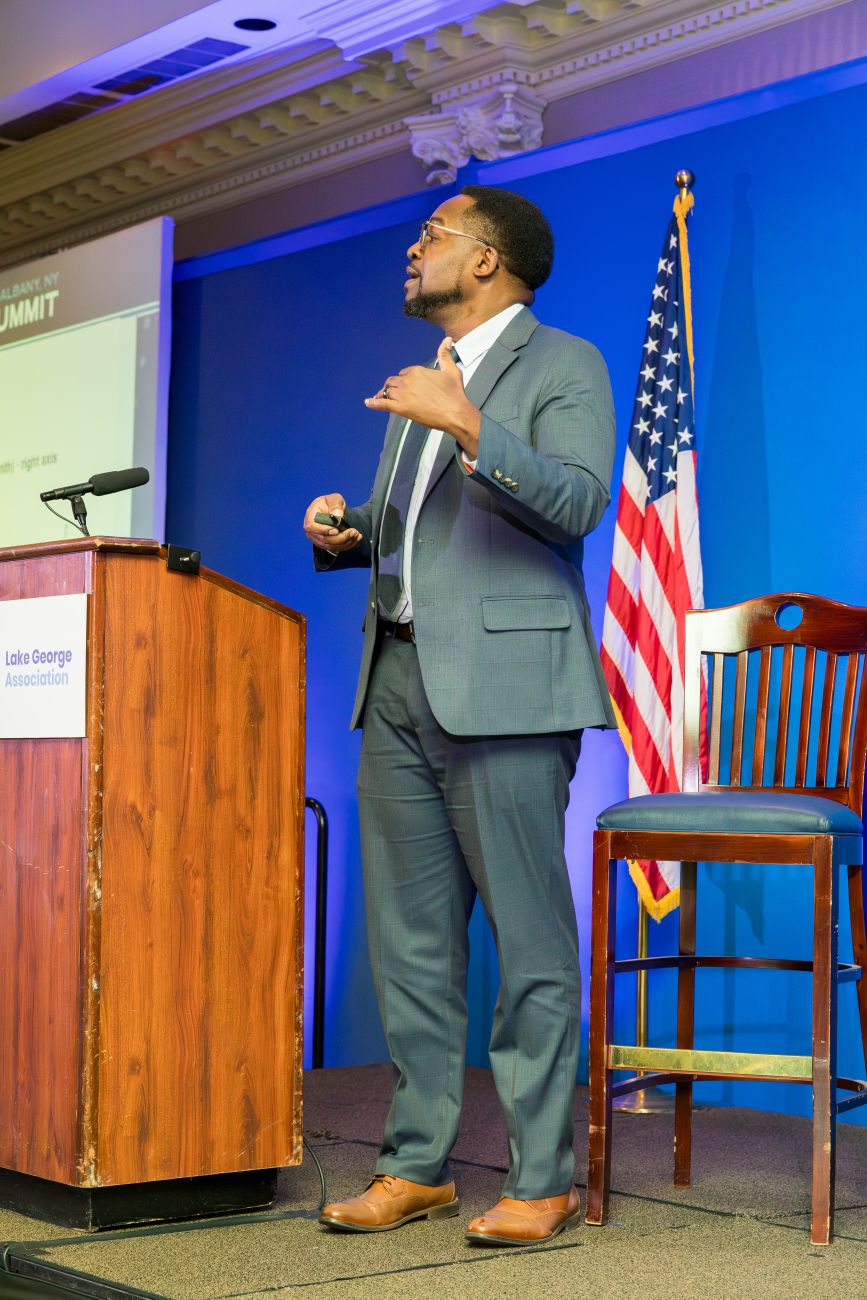
Ty Fuller
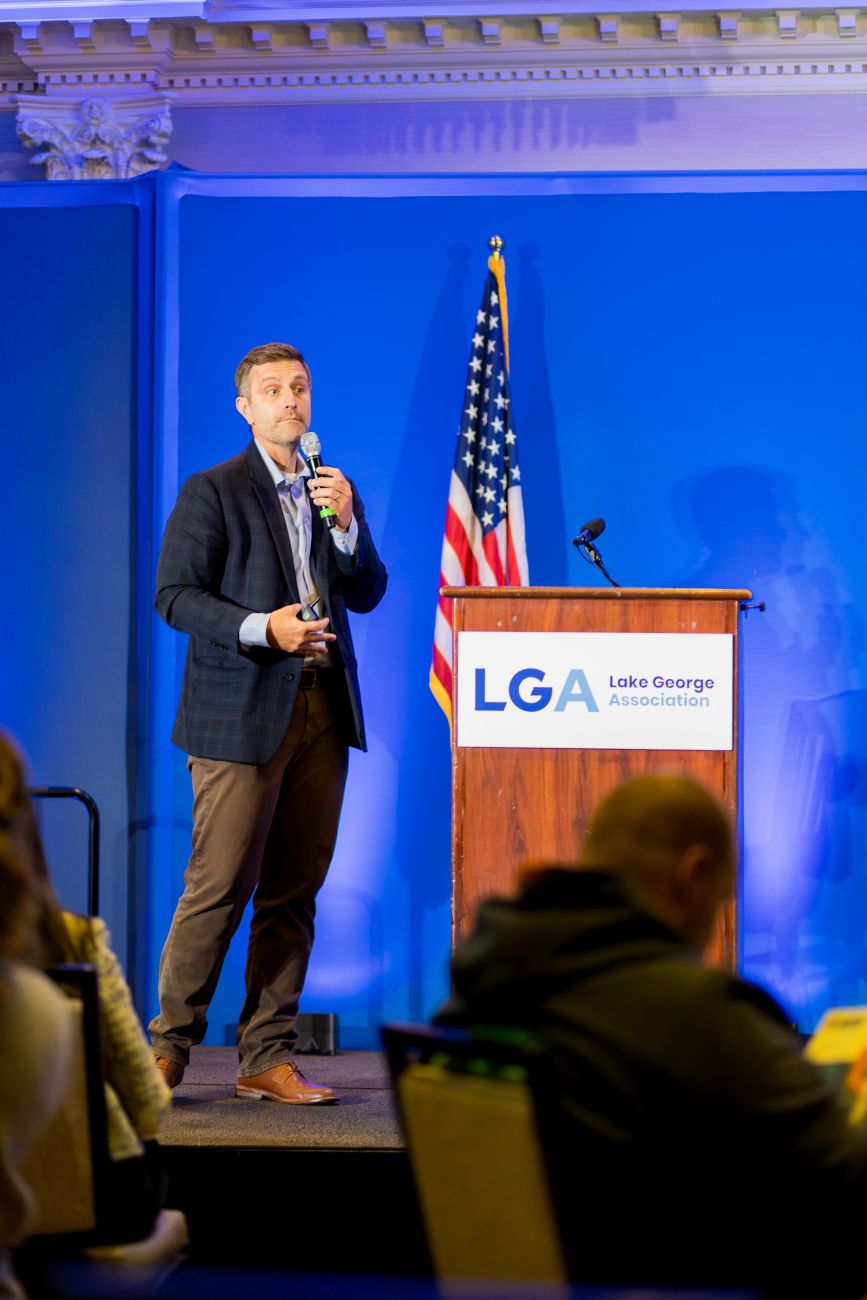
Adam Bosch
Summit attendees then enjoyed lunch while interacting with event sponsors and learning from live equipment demonstrations. Demonstrations showcased best practices with equipment, technologies and operational approaches designed to help winter maintenance professionals improve application, increase efficiency and reduce unnecessary salt use while keeping roads safe.
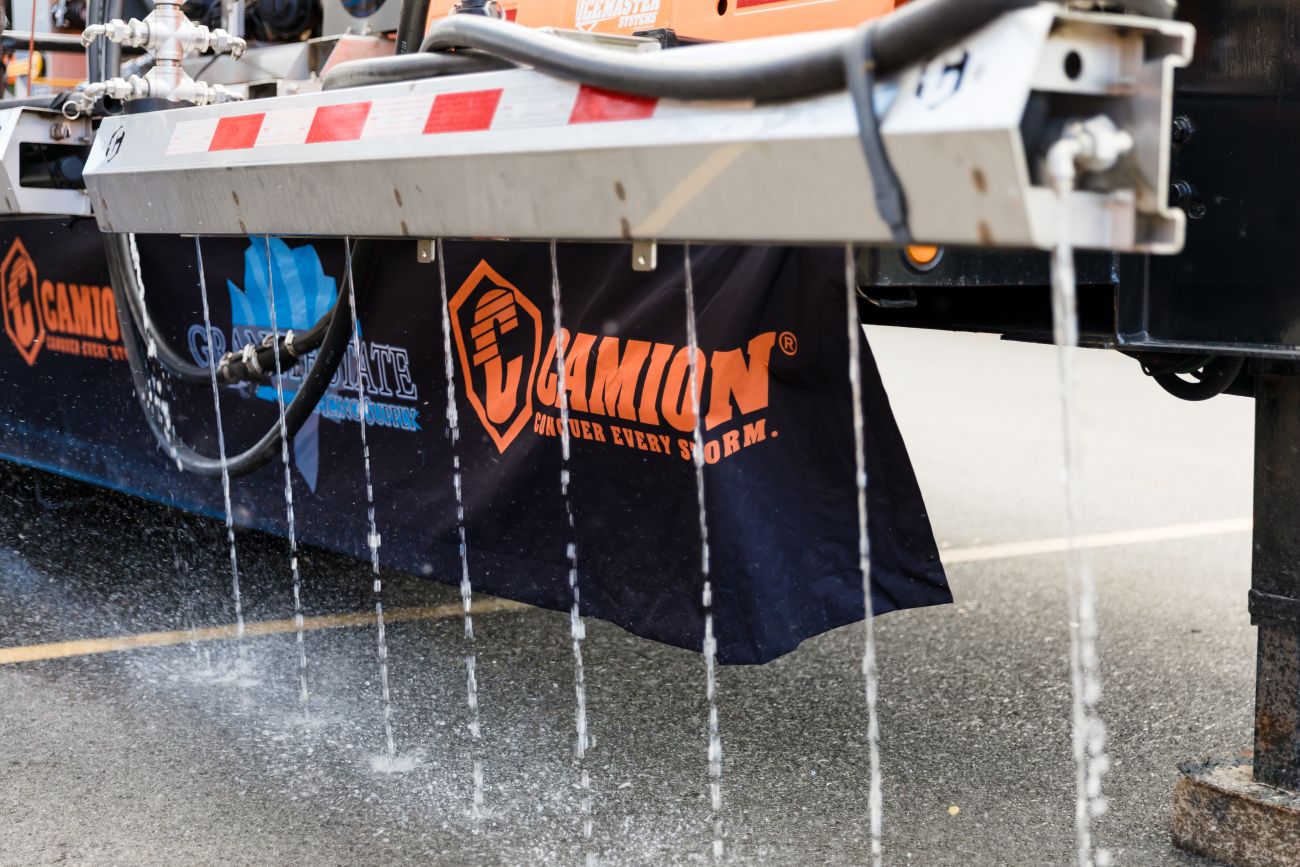
Brine Demonstration
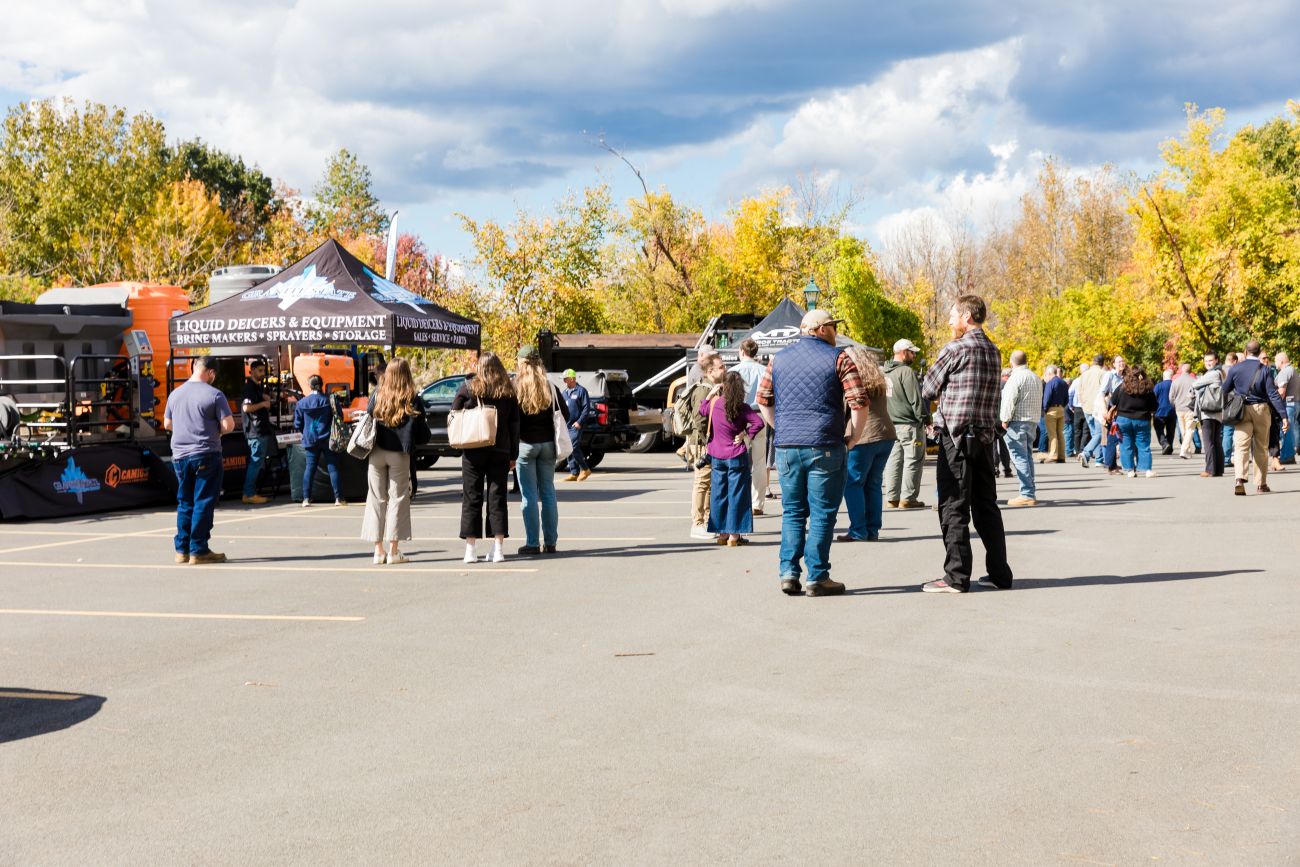
Technology Demonstrations
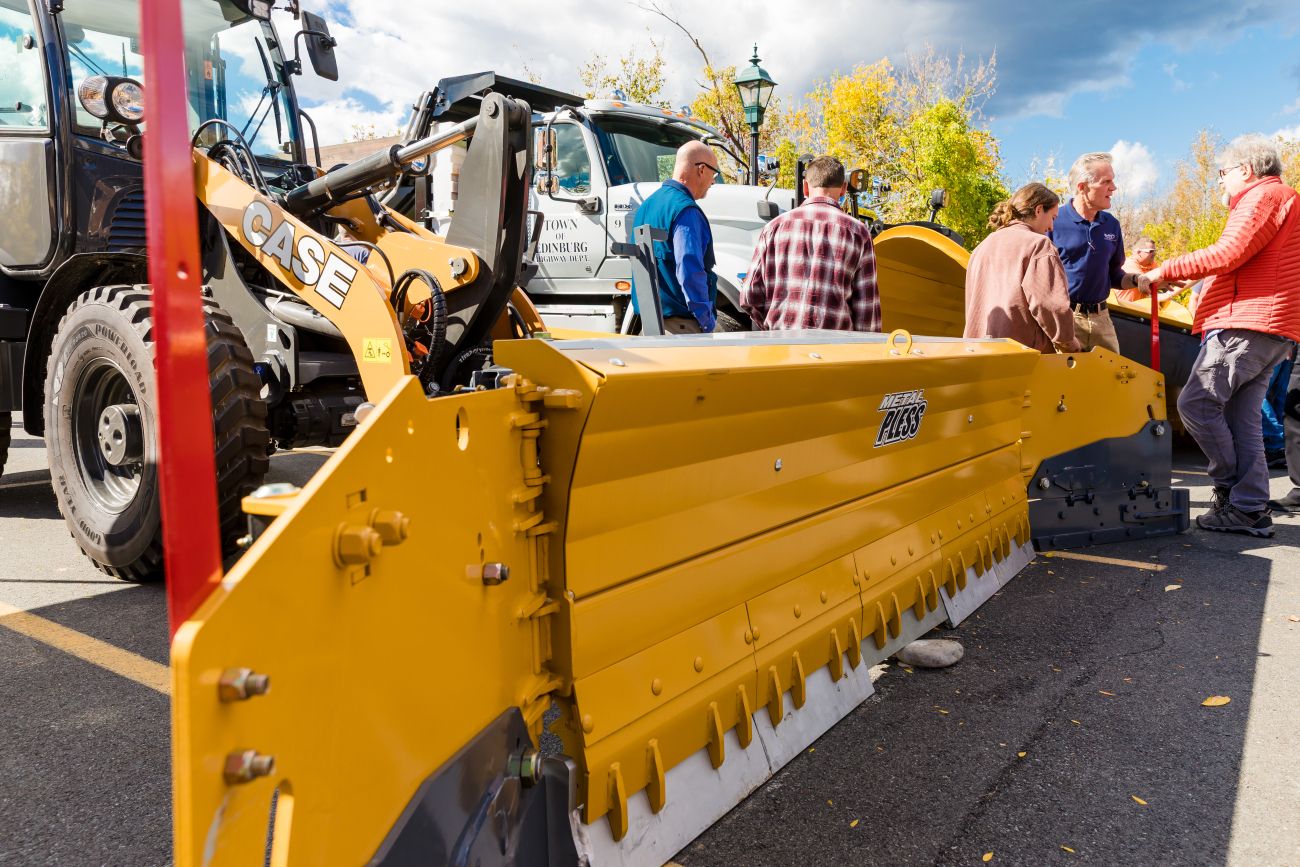
Plow Demonstration
After lunch, the Summit moved back indoors for its final sessions. The afternoon programming began with the "Salt Shortage Panel: Supply, Safety and Resilience," featuring Rob Fitch, Mike Monroe and Paul Fried, moderated by Larry Rulison.
"I think we use too much salt," stated Fried, but "litigation is one of the biggest problems we have right now." Many salt applicators want to reduce their usage but worry that they will face litigation due to a slip or fall. The panel shared that salt shortages are a good motivator to reassess road salt practices, but municipalities need protections from litigation or else they will continue over-salting to err on the side of caution.
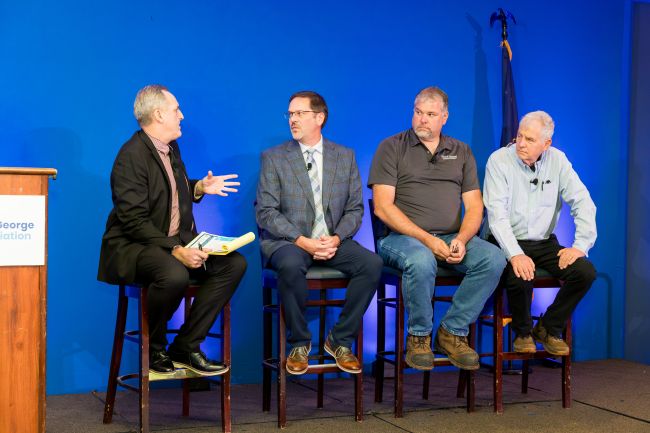
Larry Rulison, Rob Fitch, Mike Monroe and Paul Fried
The “Scaling Solutions: New York State Initiatives” session with Dr. David Orr and Leilia Mitchell also sent attendees home with much to think about, especially regarding their personal salting practices. Dr. Orr urged Summit attendees to turn to brine rather than road salt for their driveways and shared, “Use your energy and shovel early... It's cheaper to keep it clear than to use chemical.”
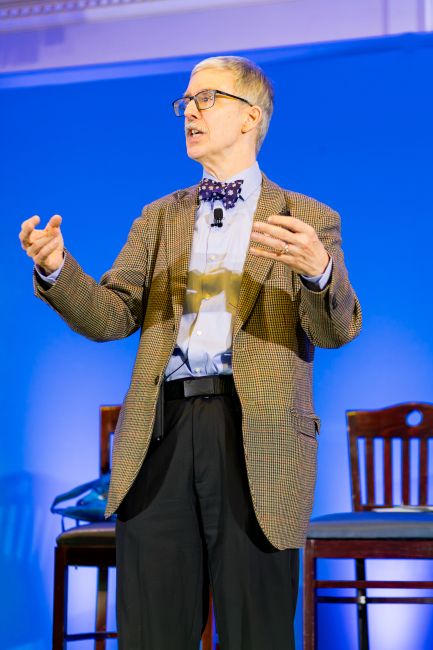
Dr. David Orr
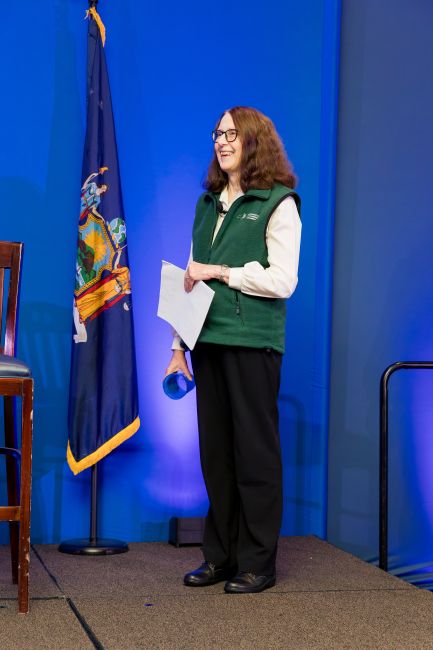
Leilia Mitchell
The final session of the Summit: "Beyond the Highway Panel: Smarter Salt Use on Private Property" highlighted how private sector leaders can adopt smarter practices. Speakers, Jennifer Clark, Chris Howk and Paul Fried discussed how the private sector can maintain safe properties while reducing unnecessary salt use that results in infrastructure damage and increased property maintenance costs in a conversation moderated by Chris Navitsky.
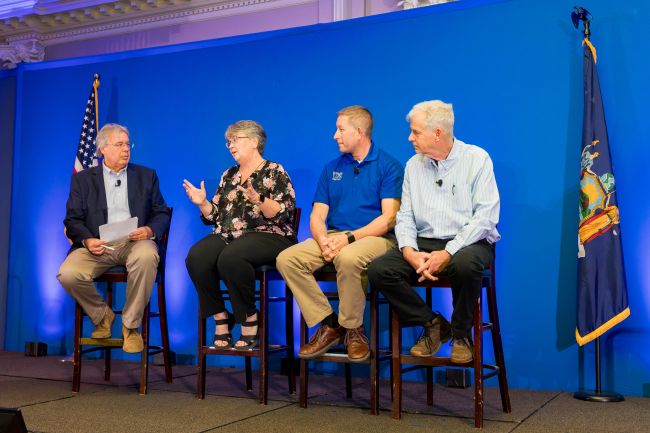
Chris Navitsky, PE, Jennifer Clark, Chris Howk and Paul Fried
To wrap up the 2026 New York State Salt Summit, Phill Sexton from WIT Advisers awarded Wegman's Chris Howk and the Town of Wilton's Mike Monroe with SWiM Certifications for their dedication to reducing road salt use to protect freshwater.
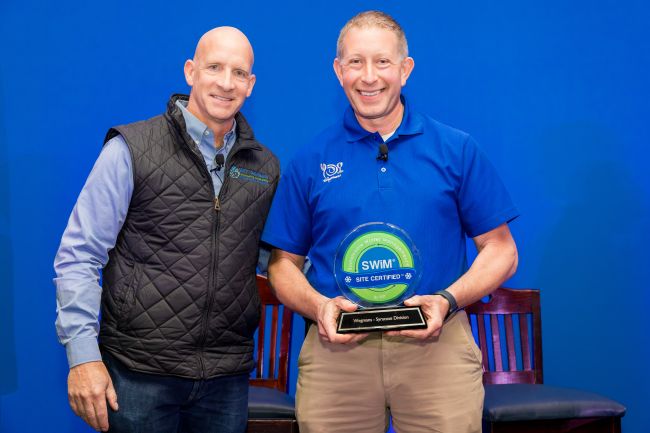
Phill Sexton and Chris Howk
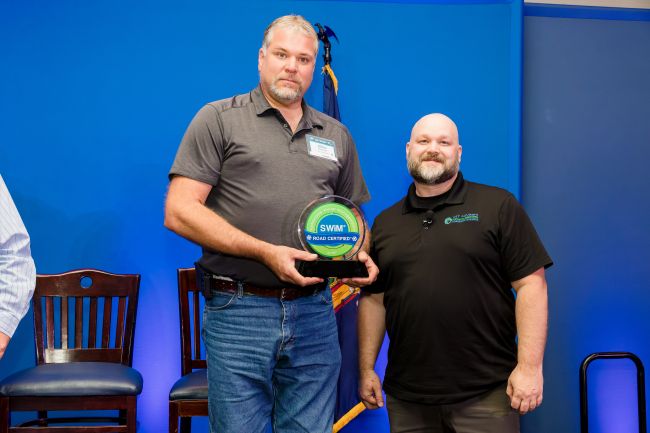
Mike Monroe and Rob Vopleus
"Let's form a coalition and together our voice for action will be heard," called Lake George Waterkeeper, Chris Navitsky, as he spoke to the Summit’s new statewide audience. "Let's work together."