September 22, 2026

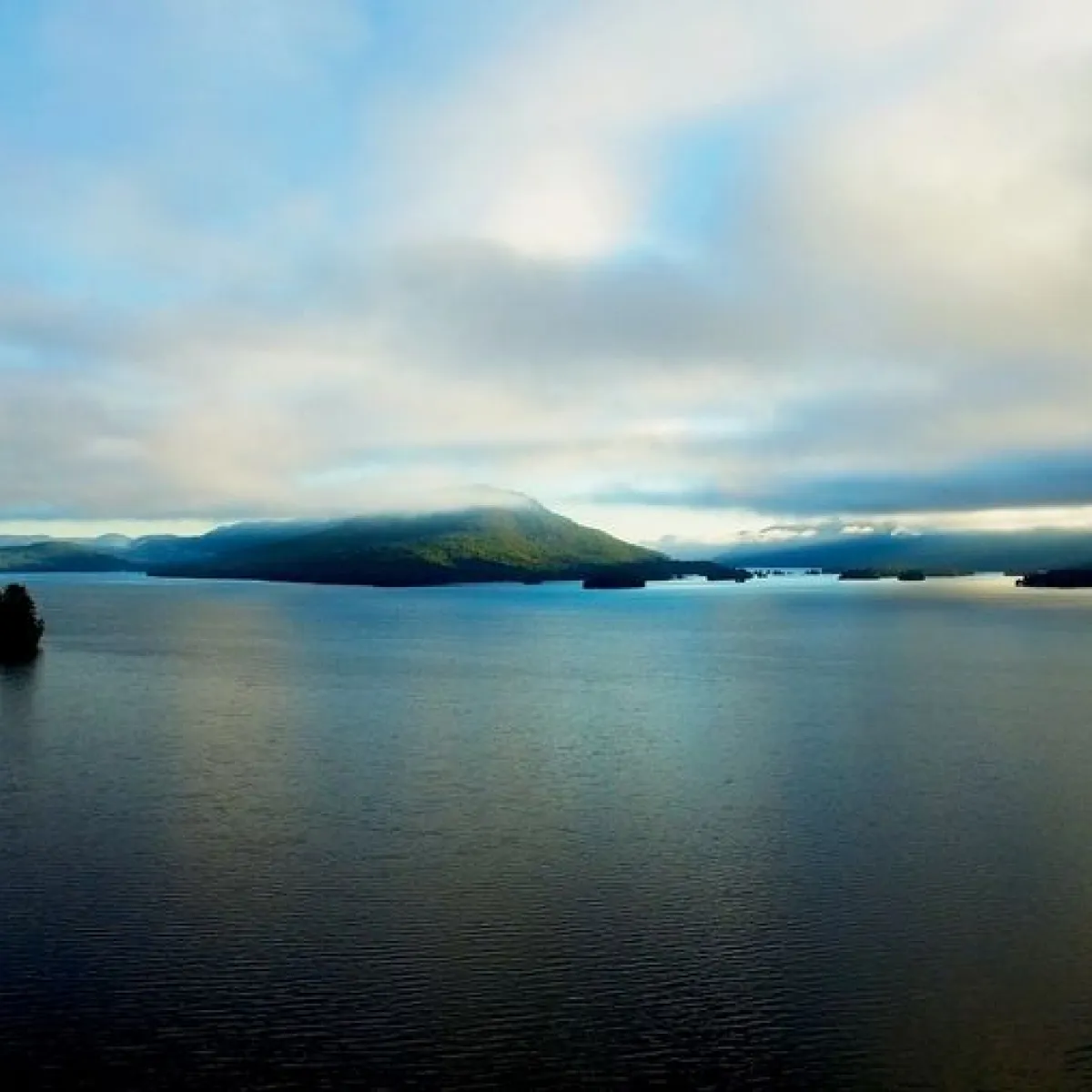
Lake George has a rhythm all its own.
Todd Earl, captain of the LGA’s Floating Classroom, has spent enough time on the water to know it well. In May, his boat may be one of only a few moving across the quiet Lake. Then, week by week, docks come alive, boats return and activity builds toward summer’s familiar crescendo. By fall, the pace begins to soften, and the Lake gradually becomes quiet once again.
Todd notices these patterns—the changing boat traffic, the movement of the water and the life unfolding along the shoreline. Each season reveals a different side of the Lake he has known since childhood.
Yet after all his years on the water, the moments that mean the most to Todd are often those when he watches someone else see Lake George differently for the first time.
Where Todd’s Story Began

A third-generation Lake George Villager, Todd grew up with the Lake as part of the natural rhythm of family life.
Every summer Sunday, his family traveled by boat to Black Mountain Point. His grandfather owned a Chris-Craft in Green Acres, and several families would gather together along the shoreline.
Todd’s father brought a small portable propane grill for their picnic. There was nothing elaborate about the afternoons—just food cooking beside the water, children exploring, adults visiting and families enjoying a summer day together.
At the time, they may have felt like ordinary Sundays. Decades later, they remain among Todd’s most meaningful memories.
That is often how Lake George becomes part of a person’s story. It happens slowly, through moments repeated across summers: a familiar boat ride, a favorite shoreline, meals shared outside and traditions passed from one generation to the next.
Todd had always enjoyed Lake George, but spending more time on its waters gave him what he describes as a new intimacy with the Lake. He began to notice its patterns and cadence. His appreciation became a deeper sense of connection—and, eventually, responsibility.
An Opportunity That Felt Meant to Be

The LGA’s Floating Classroom was part of Todd’s family story before he became its captain.
Todd’s wife served as a counselor at Lake George Junior High School, where seventh-grade students participated in the program. She often told him how much they enjoyed learning on the Lake.
When their daughter’s class took its turn aboard, Todd used a personal day from work to join her. Today, his daughter is an adult, but the experience stayed with him.
Years later, as Todd approached retirement, he found himself thinking about the Floating Classroom again. Then a letter arrived from the Lake George Association inviting him to become its captain.
The timing carried a sense of irony, as though the opportunity had found him just as he was beginning to look for it.
Now in his twelfth year, Todd calls captaining the Floating Classroom “the ultimate retirement job.”
It has given him an opportunity to step up for the place that has shaped his life—and to help hundreds upon hundreds of children and adults build a connection to Lake George of their own.
“It’s incredible,” he says, reflecting on the number of people and generations who have experienced the program.
Thirty-Two Miles of Lake—and a First Time on the Water

It may be surprising to learn how many children from communities near Lake George have never been on the Lake.
Some know it mainly from the shoreline. Others may have taken a short cruise, experiencing only a small portion of a Lake stretching 32 miles. They recognize its beauty, but they have never had the opportunity to explore its water, conduct an experiment or consider what is happening beneath the surface.
The Floating Classroom changes that.
Instead of learning about water quality from inside a traditional classroom or laboratory, students physically venture onto the Lake. They collect samples, conduct tests and participate directly in the scientific process.
The Lake becomes their classroom—and their teacher.
For students who are nervous about being on a boat or do not know what to expect, simply leaving the dock can be a meaningful experience. As the program unfolds, uncertainty often gives way to curiosity.
Todd sees that transformation from the helm.
When Everyone Lights Up

The highlight for Todd comes when the plankton net is pulled from the water.
Students and adults gather around the microscopes to examine what it has collected. For the first time, they see the tiny organisms living within the clear water surrounding them.
“They all smile and light up,” Todd says.
The reaction crosses ages, backgrounds and abilities. Todd especially values welcoming special-needs classes aboard and watching students experience the Lake in a setting that is engaging, hands-on and entirely new.
He has seen children arrive relatively uninterested and leave shaking his hand or offering a fist bump. Others step aboard having never been on a boat and finish the program with a positive experience they may remember for years.
Adults are often just as captivated. They lean toward the microscopes, ask questions and become every bit as curious as the children beside them.
In those moments, Lake George becomes more than a view.
It is no longer simply water surrounded by mountains. It is a living system filled with relationships most people cannot see from a dock or passing boat.
Discovery creates curiosity. Curiosity creates connection. And connection can become a desire to protect what has suddenly become real and personal.
Educating Generations of Lake Protectors

The lessons shared aboard the Floating Classroom remain as important today as they were when the program began decades ago.
“We are always educating the next generation of Lake Protectors,” Todd says.
He understands that not every student will grow up to become a scientist or environmental professional. That is not the only measure of the program’s success.
A student may go home and tell their family what they saw beneath the microscope. An adult may begin thinking differently about the choices made at their property. A visitor may leave with a better understanding of the care required to preserve Lake George’s renowned water quality and clarity.
A child who was initially uncertain may simply leave the boat feeling that Lake George belongs to them, too—and that they have a role in its future.
For Todd, that sense of shared responsibility is essential.
“Water quality and Lake protection are everyone’s responsibility,” he says, “whatever role they play—resident, community member or visitor.”
The Lake Cannot Protect Itself
Lake George may appear timeless, but its future cannot be taken for granted.
“The Lake can’t protect itself,” Todd says. “We have put such a demand on it.”
Road salt, nutrient pollution, aquatic invasive species, harmful algal blooms and a changing climate continue to place pressure on the Lake. There are many examples elsewhere of what a lake can become when its protection is delayed or neglected.
Lake George’s clarity is not an accident. It reflects generations of research, education, advocacy, practical solutions and people who cared enough to act.
The Floating Classroom helps make that work understandable and personal.
Participants listen to Our Lake by engaging directly with science. They strengthen Our Voice by carrying what they learn back to their families and communities. They help protect Our Future when that understanding becomes action.
What Role Will You Play?
Todd’s Lake George story began with family boat rides and Sunday picnics at Black Mountain Point.
Today, he helps other people begin stories of their own.
One may start with a child’s first boat ride. Another may begin with a look through a microscope or a question asked aboard the Floating Classroom. Years from now, that child may remember the day Lake George stopped being something they simply saw and became something they understood.
Something they felt responsible for protecting.
Todd believes that supporting the Lake George Association is one way each of us can accept that responsibility.
“The Lake needs protection,” he says, “and it’s up to us.”
Your Lake George story may have started decades ago, or it may just be beginning. Whatever your connection, you have a place in the Lake’s future.
By becoming a member—or renewing or elevating your support—you help advance the science, education, advocacy and practical solutions that protect Lake George. You also help give children, families and visitors the opportunity to experience the Lake, understand its importance and become Lake Protectors themselves.
Someone else’s Lake George story is still waiting to begin.
Help us protect it.
Together, we are the voice of the Lake.
Would you like to learn more about the LGA’s work or becoming a member? I would be happy to answer your questions and help you find a meaningful way to become involved.
Megan Seeley
Membership & Development Manager
Lake George Association
(518) 920-3882